Monday, 2 July 2012

coral reefs are found in warm seas, where the water is shallow & there's plenty of light
coral will grow only in clean water (free from pollution)
most coral reefs are found in the indian & pacific oceans, the caribbean & the red sea. they aint found where there're cold ocean currents or where large rivers flow into the sea
sunlight is a must for corals... simply they have tiny algae called zooxanthellae in their cells. these algae use the sunlight to make their own food
the algae will furnish the corals with food. in return, they get shelter & protection
some coral reefs are close to the shore are exposed when the tide goes out
the exposed coral is then damaged by the sun & the wind
the great barrier reef is the world's larger coral reef. it runs along the northeast coast of australia & is 2,500 km long
almost 6,000 different species species of animal live on this reef
credits: my first ocean life encyclopedia/google/numerous info
Friday, 22 June 2012

coral reefs are fragile habitats that are easily damaged
they are under threat from global warming...
water pollution & over-fishing
they survive in warm seas but if the temperature increases, the organisms living in the corals leave & the corals turn white and die (known as bleaching)
in order for us to creating the new reefs... ship wrecks are soon covered in corals & other reef animals. new reefs can be created by sinking old ships, cars & tanks in warm & shallow water
making a new home... the squirrel fish is hiding in a pipe on an artificial reef. the rough surfaces help sponges & coral s to become attached
take it seriously...
clearing reefs... like beaches, coral reefs can be covered in rubbish
divers can help to conserve the reefs by removing plastic bags
glass bottles, cans & other rubbish
the world's largest artificial reef was created...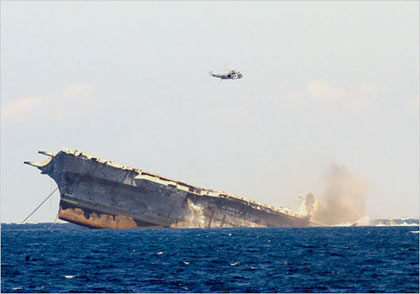
when the aircraft carrier uss oriskany...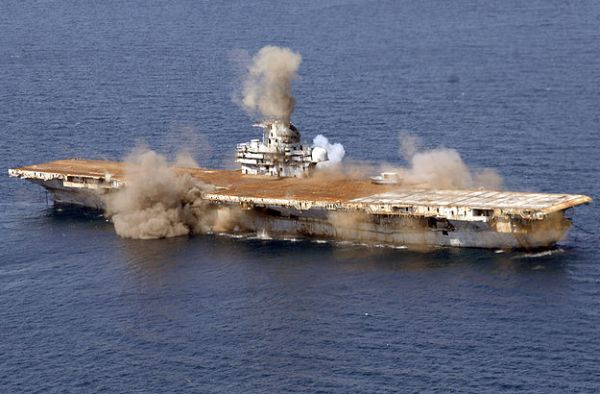
was sunk off the coast of florida in 2006
uss oriskany.. now
a motorbike on the wreck of ss thistlegorm in the red sea
credits: my first ocean life encyclopedia/google/squidoo/numerous info
Friday, 15 June 2012

the Blessed Messenger of Allah, Muhammad Sallalahu Alaihi Wassallam cared for and fed an old blind Jewish beggar at the marketplace of Madinah al Munawwarah who was always cursing him based upon blind hatred and hearsay
When the Blessed Messenger passed away, his successor and Companion Caliph Abu Bakar tried to carry on doing the same after learning about it from his daughter Siti Aishah, widow of the Blessed Messenger
When Sayyidina Abu Bakar tried to feed the old blind Jew, the blind man, caught hold of Abu Bakar's hand and asked as to who he was?
Abu Bakar said that he was the same one who had been feeding him before. The blind man refuted that and said that the one who had fed him before had chewed the food well before feeding him
Abu Bakar broke down sobbing uncontrollably and confessed to the old blind Jew that it was the Blessed Prophet of Allah, Muhammad the Mercy of God for all creation who had been feeding the blind beggar all those years and now the prophet had passed away
The old blind Jew was shocked beyond belief and he cried out wail-fully that how wretched a person he was?
He had been cursing the prophet all those years and yet had been fed and nurtured by the very same prophet without a single retort or complaint against his cursing of him
The blind Jew attested that he was really very, very sorry and declared his Syahadah before Sayyidina Abu Bakar and became a believer
Allahuma Soli Alla Syedina Muhammad Wa Aala Alli Syedina Muhammad Wa Sohbihi Wasalim
Sunday, 3 June 2012

"artifacts in and around the wreck and the hull's copper sheathing may date the vessel to the early to mid-19th century," jack irion, a maritime archaeologist with the bureau of ocean energy management (BOEM)
the shipwreck was discovered 200 miles (321 kilometers) off the gulf coast in more than 4,000 feet (1,219 meters) of water by a gulf of mexico mission led by the national oceanic and atmospheric administration (NOAA). The wooden hull of the ship has nearly disintegrated, but a greenish copper shell that once protected the ship's wood remains behind
the first hint of the shipwreck came in 2011, when a sonar survey by shell oil company turned up an unknown blip on the seafloor. BOEM requested that NOAA explore such unknown blips during a recent expedition by the ship okeanos explorer. the ship returned april 29 from its 56-day mission exploring unknown areas of the gulf
a newly discovered shipwreck in the gulf of mexico may have originally gone down 200 years ago (early 1800). the ship is full of glass bottles, ceramic plates and boxes of muskets
along the way, the researchers imaged deep-sea corals near the macondo well, the site of the 2010 deepwater horizon oil spill. they explored a thick forest of corals at the west florida escarpment, an undersea cliff. and they installed a device on okeanos' remotely operated vehicle to measure the rate that gas rises in the water column
the research team also explored 4 shipwreck on the ocean bottom. One, explored on April 19, was first discovered in the 1980s, but has only been investigated by deep-sea archaeologists twice. this wooden-hulled ship dates between the mid-19th and early-20th centuries, though its story is currently a mystery. an exploration of another wreck, this one near the mouth of the mississippi river, revealed that what was once thought to be a ship cannon was actually a bilge pump
but the most scientifically interesting ship explored was the copper-plated wreck found 200 miles off the coast, according to frank cantelas, a NOAA maritime archaeologist. the ship was full of interesting artifacts, a remotely operated vehicle exploration revealed
"some of the more datable objects include what appears to be a type of ceramic plate that was popular between 1800 and 1830, and a wide variety of glass bottles," said BOEM's irion. "a rare ship's stove on the site is one of only a handful of surviving examples in the world and the second one found on a shipwreck in the gulf of mexico"
credits:livescience/the noaa okeanos explorer/google/various data
Thursday, 24 May 2012

four new species of crab that sport some wild colors have been discovered near the philippine island of palawan
thee newfound species are threatened by mining activities in the region, which is one of the world's major biodiversity hotspots, its discoverers said. about half of the species that live on palawan are endemic, meaning they are found nowhere else
scientists at the senckenberg research institute in germany and de la salle university in manila found the four new species of insulamon freshwater crab genus as part of their aqua palawana research program
the reddish purple crabs are the only varieties that are endemic to only one or a few islands; the sea keeps them from spreading further, as they depend on freshwater at all stages of their development. having been completely separated from their relatives, they have developed their own separate species and genera over tens of thousands of years
"we have proved that the only previously known type of insulamon is restricted to the calamian group of islands to the north of palawan. the four newly discovered species live exclusively on the actual island of palawan and make it a unique habitat," said study leader hendrik freitag of senckenberg
but the unique species are threatened by several mining projects that could damage or alter the crabs' habitat
"the smaller the remaining natural habitat, the greater is the risk to endemic fauna and flora. even minor environmental changes can lead to extinctions. it is all the more important to do research in this region and show that the biodiversity of these islands is unique and worth protecting," freitag said in a statement
wahh!!! reality now? mr krabs is alive! kekekeee
credits:google/ouramazingplanet/numerous info
Sunday, 13 May 2012

claude the tasmanian giant crab 
unbelievable..

claude weighs a mighty 15lbs and measures 15 inches wide - when he is fully grown he will weigh a whopping 30lbs and gain an extra three inches... 20lbs or more worth of meat!
big crab, small appetite - the crabs don't eat very much despite being one of the largest species and they will feed on shrimp, prawns and squid
credits:dailymail.co.uk & various data